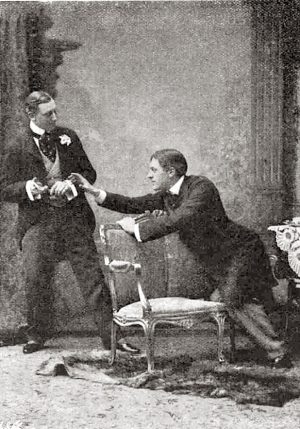
In Oscar Wilde’s play two separate men claim to be called Ernest, a solid attractive name (or so it was thought at the time). Neither is telling the truth and their alias gets them into all sorts of bother.
There aren’t many Ernests around today but it remains true that your name fixes who you are in people’s minds, for good or bad.
Maybe you’re a John, Mohammed or Noriko. In this increasingly multi-cultural world your name may not indicate your place of birth, but it does say something about the time and society you were born into. Something for strangers to latch onto.
Perhaps that’s why so many people in the public eye change theirs (or adopt stage names): Bob Dylan (Robert Zimmerman), Bono (Paul Hewson) and Sid Vicious (John Ritchie) to rename just three.
It was Molly Coddle that first got me wondering. Our language abounds with names that mean something else entirely, but where did they come from?
Who was Peeping Tom? Who invented Murphy’s Law? Was the Real McCoy really real?
Molly Coddle
Unfortunately – like Ernest – Molly never really existed. Or rather she did (and she had the oldest of all professions). Molly was a nickname used for all Marys, especially for lower class women (like 20th century gangsters’ molls) who sometimes had to resort to sex work to make ends meet.
If you were a Molly you were a social outcast. So, it wasn’t long before the term was also being applied to homosexual men.
Being openly gay at the time carried the death penalty and ‘Molly Houses’ (secret gay meeting places) were frequently raided.
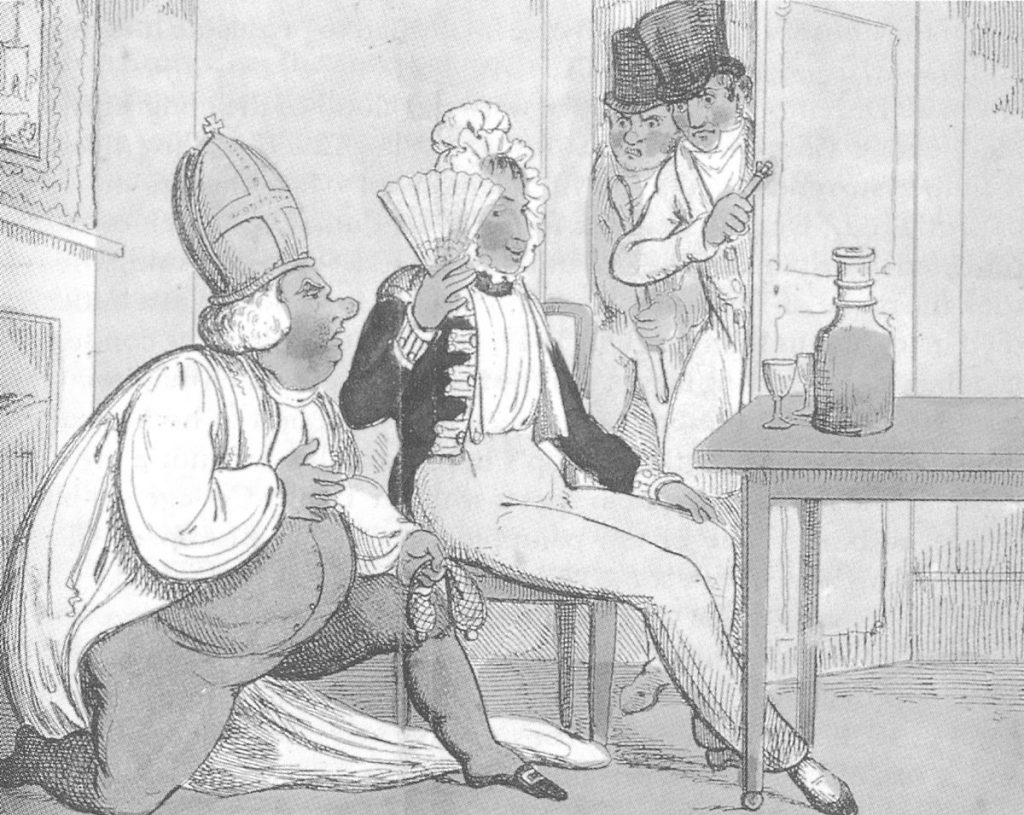
In 1726 the public was scandalised by newspaper reports of an Old Bailey trial which detailed what gay men got up to in one.
‘Sometimes they’d sit in one anothers Laps, use their Hands indecently Dance and make Curtsies and mimick the Language of Women – O Sir! – Pray Sir! – Dear Sir! Lord how can ye serve me so! – Ah ye little dear Toad! Then they’d go by Couples, into a Room on the same Floor to be marry’d as they call’d it.’ (1)
By 1864 the Dictionary of modern slang, cant and vulgar words revealed how the Victorians’ prudishness had led to a toning down in the definition of what it was to be a Molly, ‘an effeminate man; one who caudles amongst the women, or does their work.’
Caudle was warm ale or wine, oatmeal, eggs, sugar and milk mixed together into a nourishing warm drink that was used to build up nursing mothers or the sick. So, sex workers became milk sops, meaning in 2026 we can gossip about how so-and-so’s child has been mollycoddled without blushing.
Grabbing a sandwich
Molly Coddle may never had existed. But, as eponyms, the names of plenty of real people have taken on a meaning of their own.
(Public Domain, https://commons.wikimedia.org/w/index.php?curid=629907)
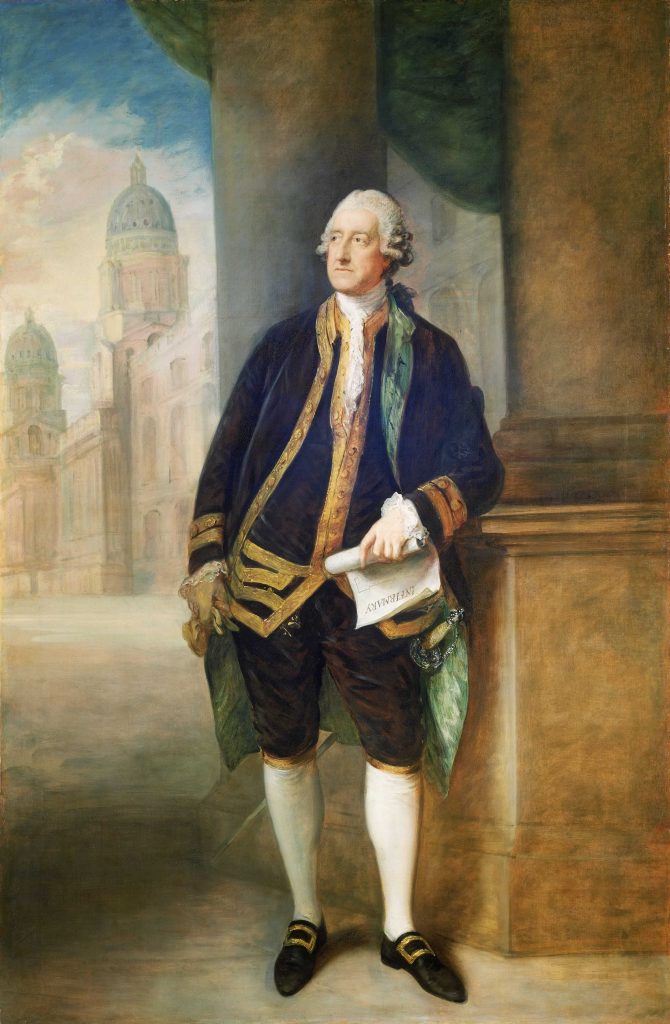
At lunchtime you could grab a sandwich (During a Grand Tour of the Mediterranean the 4th Earl of Sandwich had eaten stuffed breads. Once back home, he shocked others at the gaming table in 1762 by asking for a snack…bread wrapped around some beef!), your car may be a diesel (Rudolf Diesel was the inventor of the diesel engine) and if you’re extra careful with your money, you’re a Scrooge (the miserly hero of Dickens’ Christmas Carol).
Holding on for a Jimmy Riddle
Cockney Rhyming slang developed throughout the nineteenth and early twentieth centuries. It helped Working-class Londoners conceal what they were talking about from outsiders (especially the police). Its memorable rhymes grew out of popular culture and often hijacked the names of celebrities. Some ‘name’ rhymes survive to this day.
Jimmy Riddle
(meaning to urinate)
Jimmy Riddle started life as a Victorian Music Hall song about a man who played the fiddle (violin). However, violins didn’t come up that much in everyday conversation, so the Riddle/Fiddle meaning soon lost favour.
Piddle had very old origins. It meant a stream of water. Soon, when half-cut Eastenders (their bladders bursting) emptied out of pubs at closing time, they could be heard slurring that they didn’t half need a Jimmy Riddle.
Mutt and Jeff
(to be deaf)
In 1907 an American called Bud Fisher created the first comic strip to appear regularly in any newspaper in the world. It was called ‘Mutt and Jeff’and its protagonists were a pair of mismatched men. Their antics proved a hit with readers on both sides of the Atlantic and the strip’s name provided a handy rhyme.
Forgetting a name
Both celebrity and slang fade over time and many ‘name’ rhymes have been long forgotten. These include:
Dan Tucker (butter) – from the title of a Victorian blackface minstrel song.
Artful Dodger (a lodger) – from a character in Charles Dickens’ Oliver Twist.
Brian O’Linn (Gin) – from an Irish folk song dating back hundreds of years.
Jack Randall (a candle) – from a famous Irish boxer in the early 1800s.
Lord Lovel (a shovel) – a nobleman immortalised in a popular ballad.
Rory O’More (the floor) – a controversial Victorian drama about a man convicted of murder even though the victim lived on.
Sir Walter Scott (a pot) – named after Scotland’s most famous author.(2)
Not the Real McCoy
Sometimes it’s hard to know who’s real or not.
Hooray Henry
(an ineffectual, snobbish young man)
Despite what you may think, Henry never lived in Brideshead or Downtown Abbey and is not that English at all. The phrase was coined in 1936 by the American writer Damon Runyon for his short story Tight Shoes. The original ‘Hooray Henry’ was Calvin Colby, a purposeless young man who lives off the bank of Mum and Dad and is constantly in the gossip columns for crashing his cars.
Peeping Tom
(a voyeur)
You’ve probably heard of Lady Godiva’s daring naked ride through Coventry and the tailor called Tom who dared to peep.
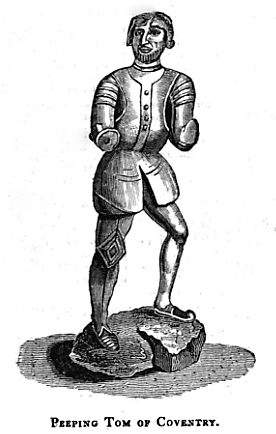
Well, like most history the tale needs to be taken with a large pinch of salt as it was only written down in 1190 AD, more than a hundred and fifty years after the event.
Wendover’s Flores Historium recounts how Godiva repeatedly petitioned her husband (Leofric, the Earl of Mercia) to reduce the toll he collected from Coventry. In exasperation, he snapped that he was as likely to do that as she was to ride through the marketplace naked. So the feisty lady set out with two knights as her guard, her long hair hiding everything except ‘her fair legs’ (English translation) and forced Leofric to back down.(3)
Thomas, however, was nowhere to be seen. He first surfaces in the 17th century with the establishment of a Great Fair and Godiva procession. Sex sells and a salacious story about voyeurism will always draw more punters!
The real Real McCoy
Some eponyms have obscure roots (like the real McCoy) whilst other more modern ones are easier to trace to the original source.
The Real McCoy
(the best, or the original)
This much travelled phrase has many origin-stories. Here is the most plausible story (to me, at least).
In 1819 Charles MacKay played the part of Baillie Nicol Jarvie in the first Edinburgh run of a play based on Scott’s novel Rob Roy. The Scots Magazine gave his performance a rave review, it ‘embodied to the eye and to the ear all the peculiarities which of right belong to a merchant – a magistrate – and member of the town-council in a Scottish corporation.’(4)
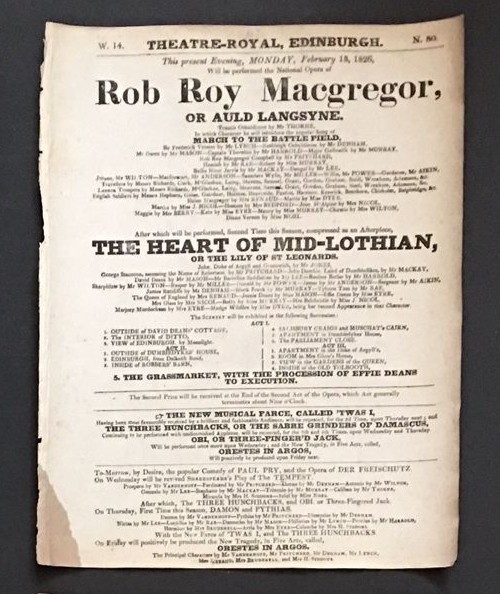
(Playbill in the author’s collection)
The show would become a staple box-office hit of nineteenth century UK theatre and Mackay’s performance the benchmark by which all actors attempting the role would be judged. It is said that on one occasion when an understudy filled his shoes, a member of the audience cried out, ‘That’s no the real MacKay!’ Only the genuine article would do.
Within twenty years the phrase had established itself in everyday Scots and by the 1840s newspapers north of the border were using it content in the knowledge that their readers would understand what was meant by it. In 1848 one Scottish newspaper reported that James Quin (a hatter) was guilty of defrauding someone by taking a hat in to be repaired and returning another that was not ‘the real Mackay’. The following year when announcing a new show a different newspaper claimed that though its star had ‘hosts of imitators’, he alone is ‘the real Mackay’.(5)
The phrase became such common parlance that by the turn of the 20th century at least two different distilleries were using it to market their whisky.
It is likely the phrase had already travelled to the USA with Scottish emigrants. There, alcohol was outlawed in the 1920s and illicit speakeasies sprang up all over the place. They offered cheap ‘booze’ to their punters who often wanted something better. Syracuse-born Bill McCoy seized the opportunity to make a fortune smuggling high quality spirits into the country. If you wanted the best stuff, you now asked for ‘the Real McCoy’.
The Second World War brought an influx of US troops into England and new ideas of luxury and, as one newspaper noted, what ‘the U.S.A. soldiers are teaching us to call the real Maccoy.’(6)
So, the real MacKay is smuggled into America and returns a McCoy!
Gordon Bennett
(expressing shock, surprise or disbelief)
James Gordon Bennett (1841-1918) shared his name with his father, the Scottish founder of the New York Herald. So as not to be constantly confused with him, he dropped the first name.
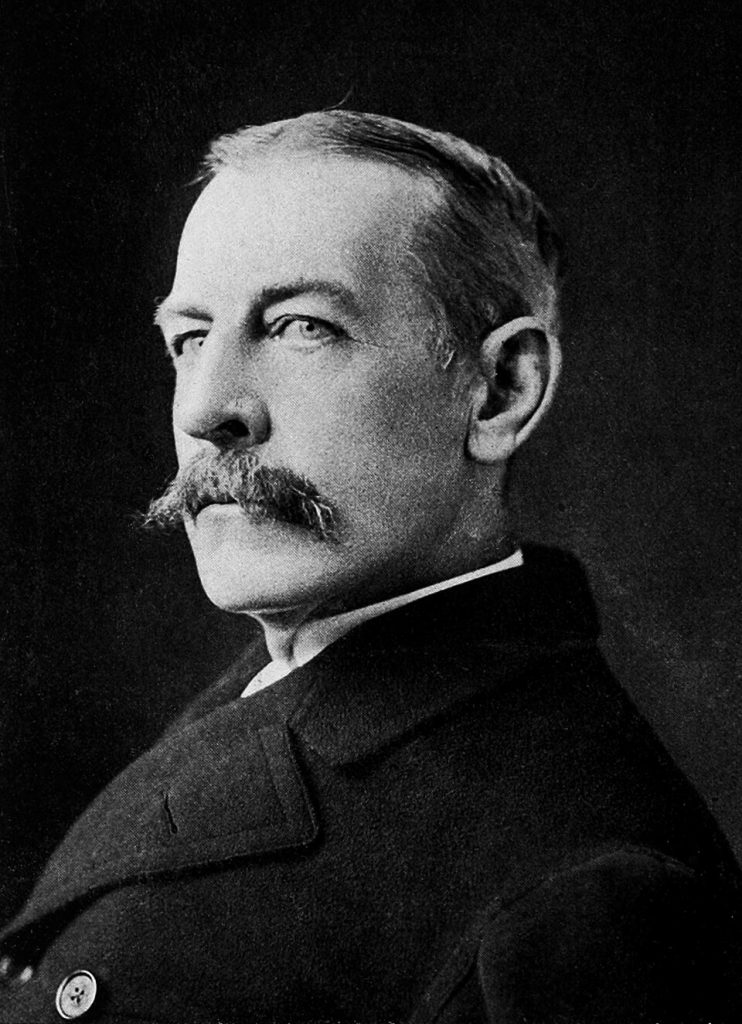
(Image: Famous Americans: their portraits, biographies and thrilling experiences (The Educational Company, Chicago 1901), Public Domain)
He went on to inherit the paper and a vast fortune and enjoyed the lifestyle of the super-rich (buying custom-made yachts, private railway carriages, mansions etc). However, his outrageous behaviour more often than not scandalised polite society. On one occasion, he arrived drunk to a party and – in front of his host – had a Jimmy Riddle in the fireplace.
And finally, if this website crashes while you’re reading this, please blame Captain Edward A Murphy…
Murphy’s Law
In the late 1940s Murphy (1918-1990) was assigned to a research project at Edwards Air Force base designed to find out the effects of G-forces on fighter pilots.
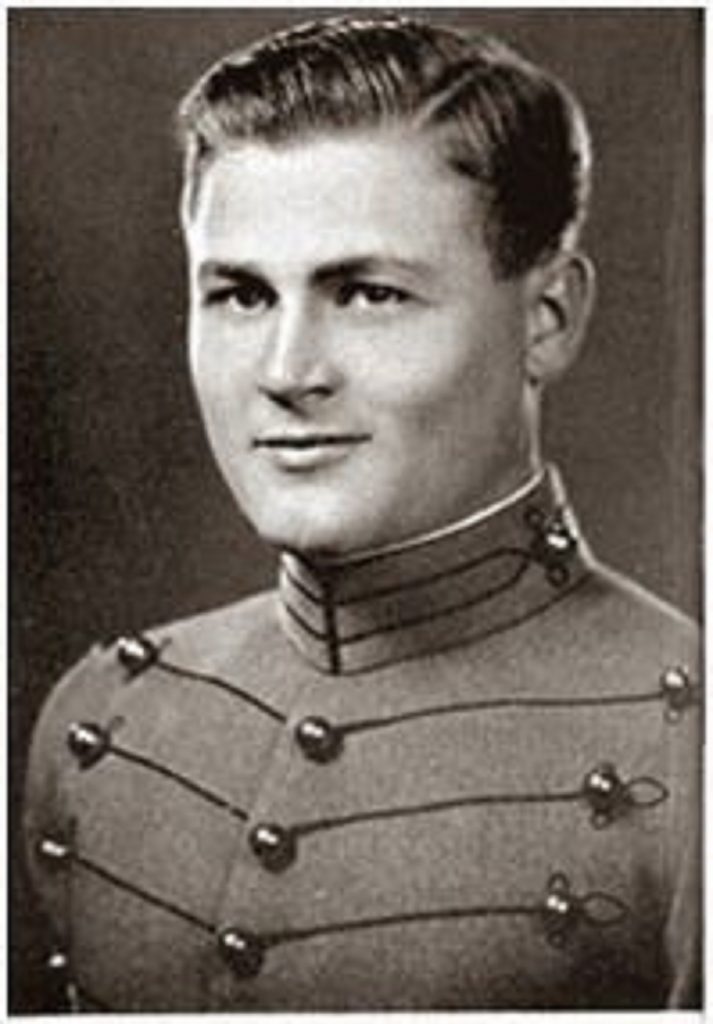
(Public Domain image, Wikitree)
When sensors failed in the experiment due to faulty manufacturing, he uttered the famous saying which eventually found its way into the press as ‘if anything can go wrong, it will.’
References
(1) Proceedings of the Old Bailey, Trial of Margaret Clap, 11 July 1726
(2) The Slang Dictionary; or, the vulgar words, street phrases and ‘fast’ expressions of high and low society. (1864)
(3) Roger of Wendover’s Flowers of history, Comprising the history of England from the descent of the Saxons to A.D. 1235; formerly ascribed to Matthew Paris. Translated by JA Giles. Vol. 2 (1849)
(4) The Scots Magazine – Thursday 01 April 1819
(5) Arbroath Guide – Saturday 12 February 1848; Fifeshire Advertiser – Saturday 05 May 1849
(6) Nottingham Journal – Saturday 27 March 1943